
Share

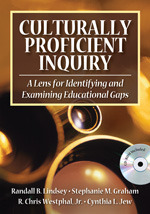
Culturally Proficient Inquiry
A Lens for Identifying and Examining Educational Gaps
Edited by:
- Randall B. Lindsey - California State University Los Angeles, USA
- Stephanie M. Graham - Los Angeles County Office of Education
- R. Chris Westphal, Jr. - San Juan School District, CA
- Cynthia L. Jew - California Lutheran University, California
April 2008 | 256 pages | Corwin
This book presents a model and tools for collecting and analyzing data, beyond only test scores, that leads to systemic analysis and change that benefits groups that had previously been underserved by the system. It combines the framework of Cultural Proficiency with the process of school audits.
Because of the requirements of NCLB, many schools realize that their schools have an achievement gap. This book will help them look at more and better sources than raw test scores such as school conditions and the assumptions and beliefs of the school's educators about the students they serve. As a result of conducting an equity audit, educators will learn what they need to do differently for all students to be successful in their school.
Foreword
Preface
Acknowledgments
About the Authors
Part I. Creating Culturally Proficient Schools
1. The Unfolding of the Democracy as a Moral Imperative
2. The Tools of Cultural Proficiency
Part II. Knowing the Demographics of Your School
3. NAEP Data Show the Way, With Limitations
4. The Peer Group Model: Achievement and Access Data
5. Planning the Cultural Proficiency Inquiry
6. Rubrics as Keys to the Cultural Proficiency Inquiry
Part III. The ABC Case Study School and Your School
7. Data Set #1: Finding Meaning in Achievement Data
8. Data Set #2: Finding Meaning in Student Access Data
9. Data Set #2 (Extended): Finding Meaning in Access Data Unique to Secondary Schools
10. Data Set #3: Profiles of Educator Conversations About Your Students
11. Advocacy for Social Justice
Appendix
References
Index