
You are here

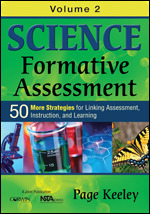
Science Formative Assessment, Volume 2
Share
Share

Science Formative Assessment, Volume 2
50 More Strategies for Linking Assessment, Instruction, and Learning

A Joint Publication With the National Science Teachers Association


Other Titles in:
Formative Assessment | Science

December 2014 | 256 pages | Corwin
This book shows readers how to use assessment to inform instruction and learning in the science classroom. In the bestselling first volume, Page Keeley shared 75 techniques that help K-12 science teachers determine students' understanding of key concepts and design learning opportunities that will deepend students' mastery of content and standards. Volume 2 will present 50 new strategies linked to the Next Generation Science Standards. These flexible assessments can be used with any science curriculum.

The assessments include:

- a description of how each technique promotes student learning

- considerations for design and implementation, such as required materials, timing, modeling the technique, and grouping students

- modifications for different types of students or purposes

- caveats for using each technique

- ways the techniques can be used in other content areas

 
Preface
 
Acknowledgments
 
About the Author
 
Chapter 1. An Introduction to 50 More Formative Assessment Classroom Techniques (FACTs)
Classroom Snapshot of Formative Assessment in Practice

 
Why 50 More FACTs?

 
Elicitation FACTs

 
Supporting Productive Science Talk

 
Next Steps


Chapter 2. Formative Assessment and Standards
FACTs and Core Disciplinary Content

 
FACTs and Scientific and Engineering Practices


Chapter 3. Get the FACTs! Formative Assessment Classroom Techniques
1. Always, Sometimes, or Never

 
2. B-D-A (Before–During–After) Drawings

 
3. C-E-O-SE (Commit–Explain–Observe or Obtain Additional Information–Scientific Explanation)

 
4. Claim Cards

 
5. Comments Only

 
6. Comparison Overlap Probes

 
7. Concept Attainment Cards

 
8. Concept Mix-Up Probes

 
9. Confidence Level Assessment (CLA)

 
10. Cross-Cutter Cards

 
11. CSI (Color–Symbol–Image)

 
12. Diagnostic Collectons

 
13. Enhanced Multiple Choice

 
14. Every Graph Tells a Story

 
15. Everyday Mystery Stories

 
16. Example, Non-Example

 
17. Extended Sticky Bars

 
18. Eye Contact Partners

 
19. Feed Up, Feedback, and Feed Forward

 
20. Fingers Under Chin

 
21. Four Corners Jigsaw

 
22. Gallery Walk

 
23. Group Frayer Model

 
24. Group Talk Feedback

 
25. Homework Card Sort

 
26. Hot Seat Questioning

 
27. I Think–I Rethink

 
28. Learning Intentions

 
29. Let's Keep Thinking

 
30. Lines of Agreement

 
31. Magnetic Statements

 
32. Matching Cards

 
33. More A–More B Probes

 
34. Opposing Claims Probes

 
35. Picture This

 
36. Plus–Delta

 
37. PMI (Plus–Minus–Interesting)

 
38. Ranking Tasks

 
39. RAQ (Revise, Add, Question) Feedback

 
40. Reflective Toss

 
41. Slide Sort

 
42. Success Indicators

 
43. Talk Moves

 
44. TAR (Target, Analogy, Reflection)

 
45. Thumbs Up, Down, Sideways

 
46. Traffic Light Sliders

 
47. Vernacular Probes

 
48. VDR (Vote, Discuss, Revote)

 
49. What Did I Learn Today?

 
50. Word Sort


Appendix: Annotated Resources for Science Formative Assessment
 
References
 
Index

Purchasing options

Please select a format:

ISBN: 9781452270258
£31.99